
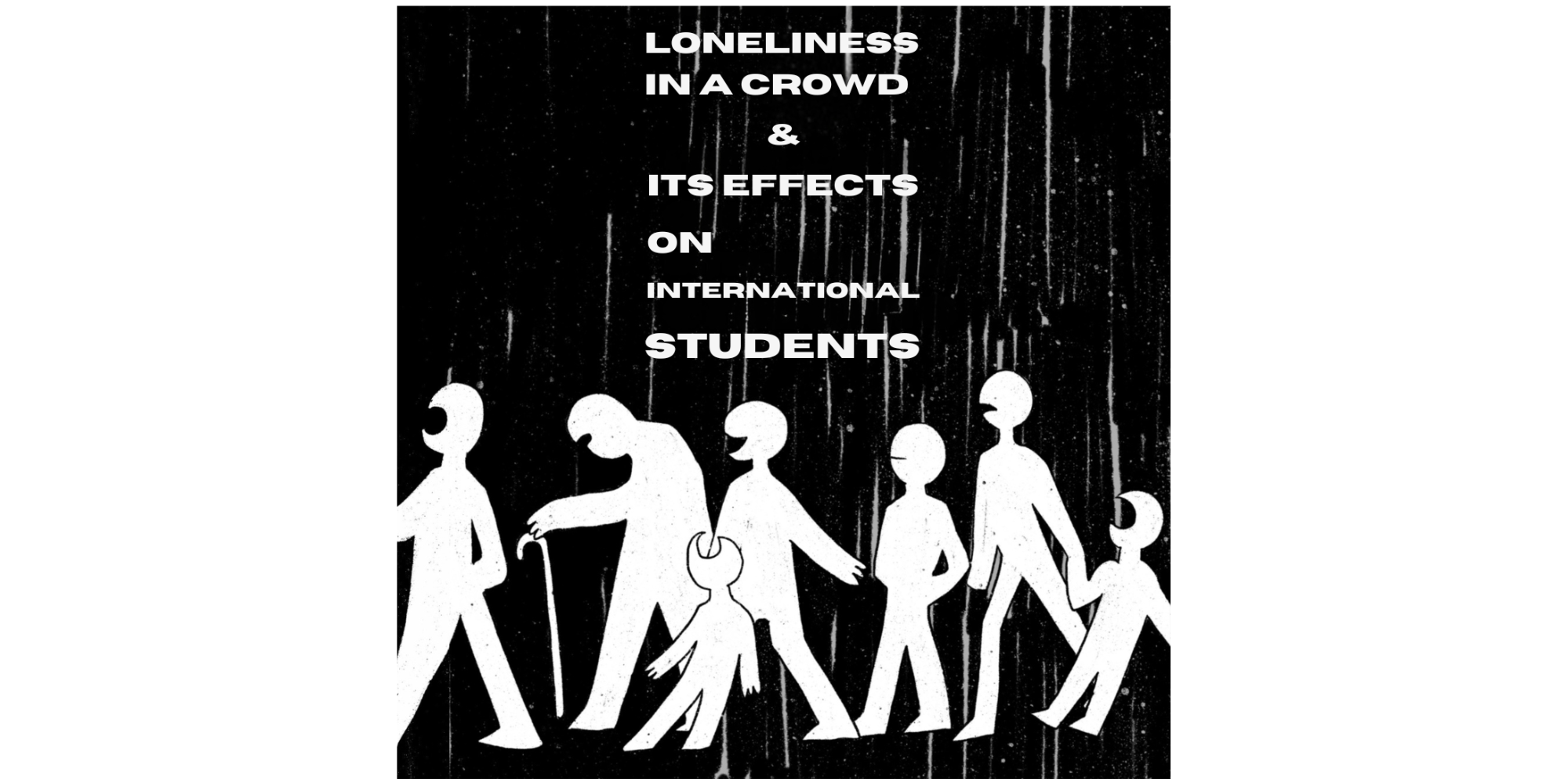
Research Question: How does the myth that 'loneliness only affects people who are alone' impact international students?
When I was first searching for my topic, I first took inspiration for what was around me: students.
And what a great deal of students – most from outside of The Netherlands, who all came with
one thing in common: study outside, learn everything they can and somehow, find their place in
this hectic world. This can very easily create the perfect environment for loneliness to set in.
How can this happen though, if people are always near each other, either during classes, the
cafeteria, the library or working on projects?
This is why this visual essay dissects the myth of loneliness and the state of being alone, while
viewing everything from a lens of a young person, studying and moving to a new country,
navigating a new chapter of their life.
While loneliness is derived from the word 'lonely', meaning "unhappy because you are not with
other people" (Lonely), studies show that it's not directly related to how few people are around
the person, but rather connected to finding a group of people that share the same values.
Loneliness grows when no meaningful connections are formed, further causing damage to the
person by impairing a person's social skills. This often results in a person isolating themselves
and feeling rejected from any social setting. (Zheng et al.)
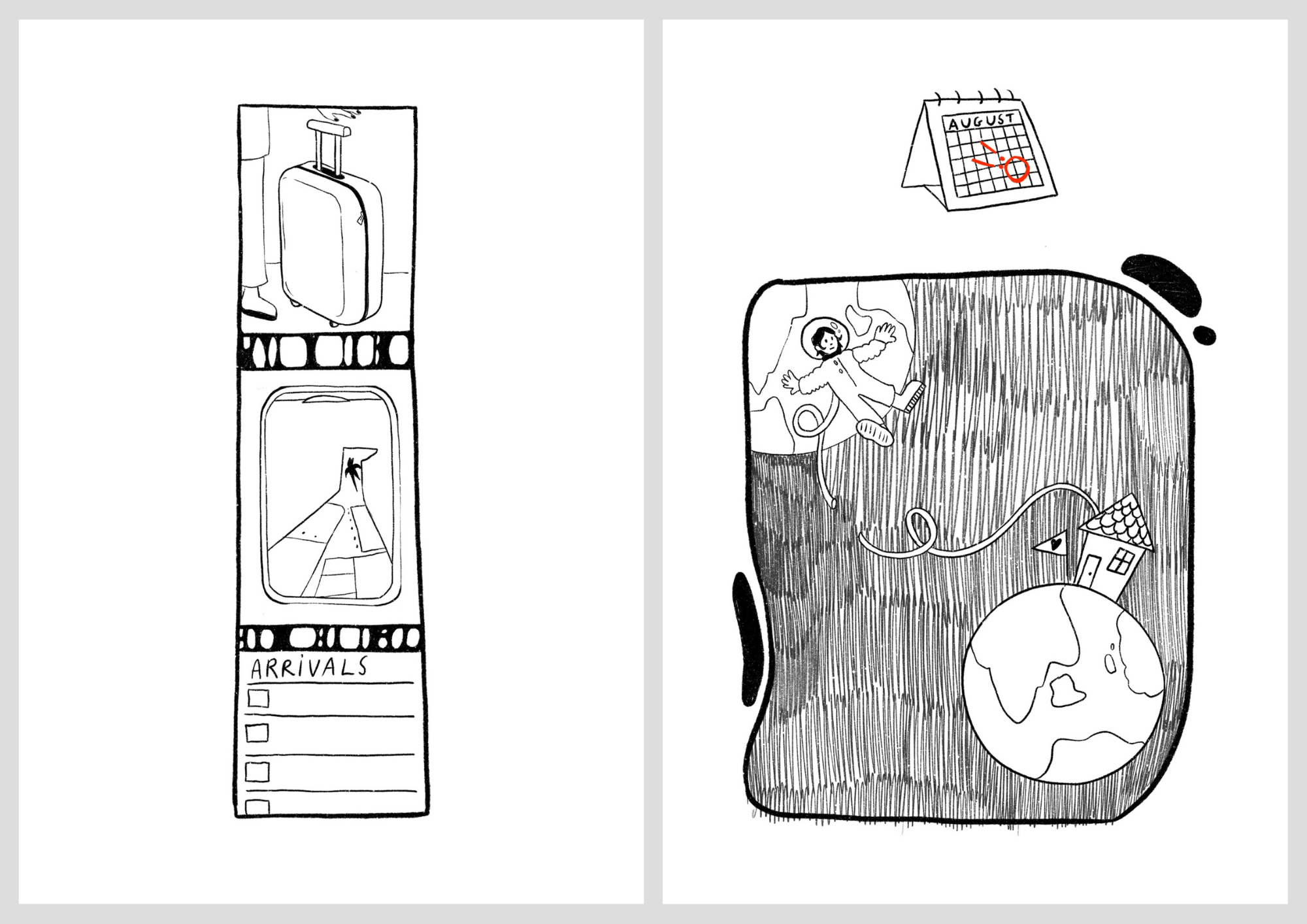
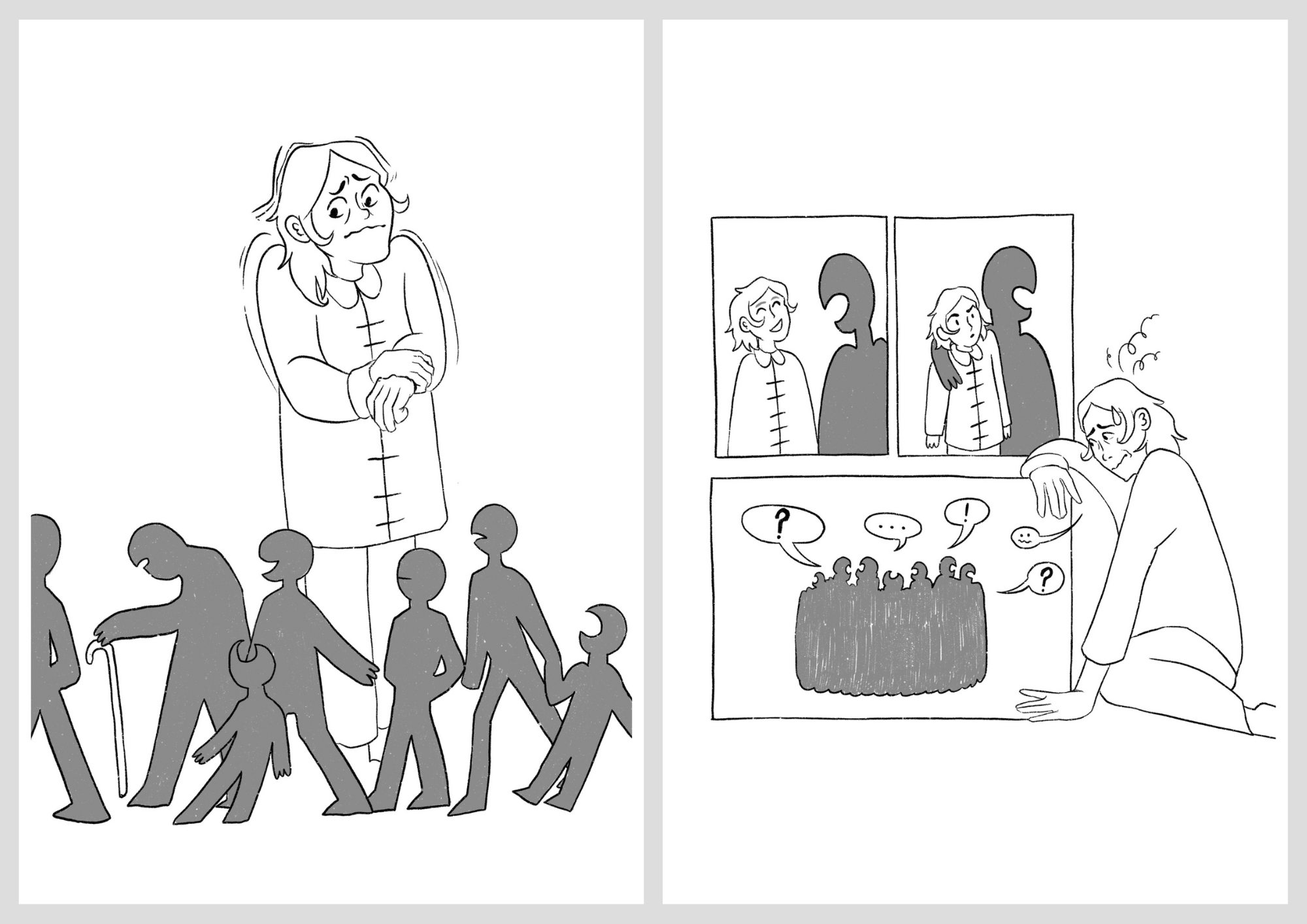
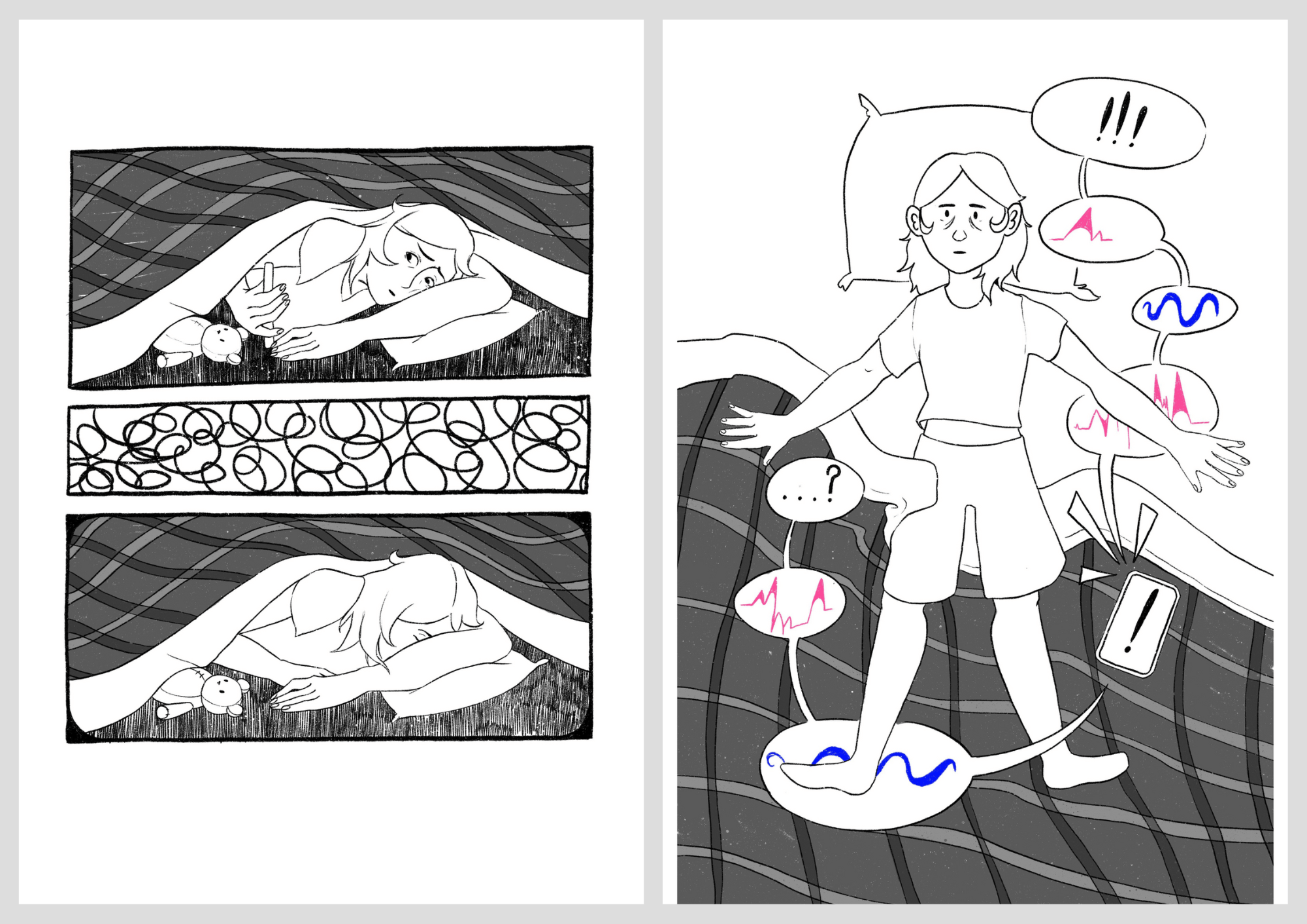
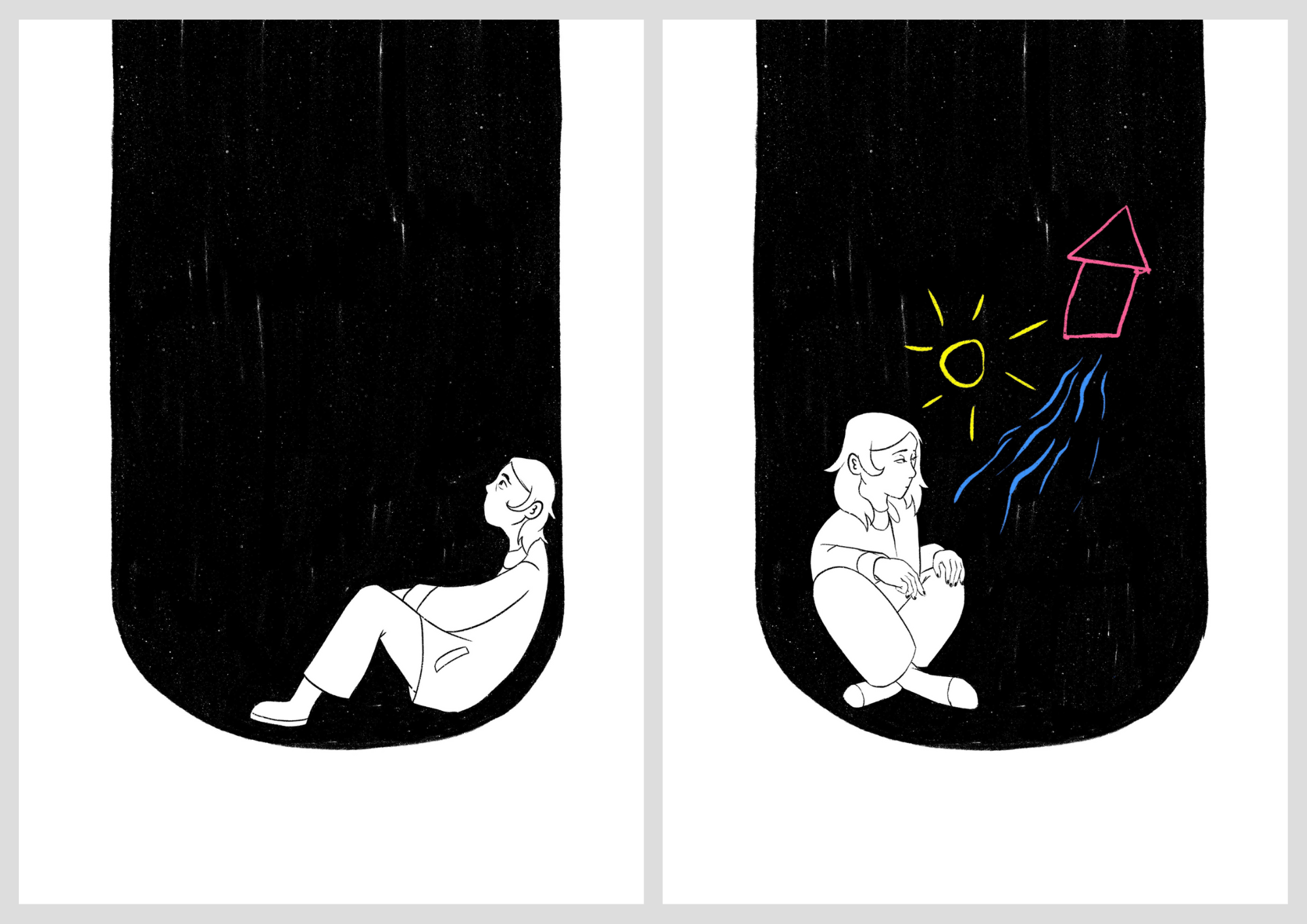
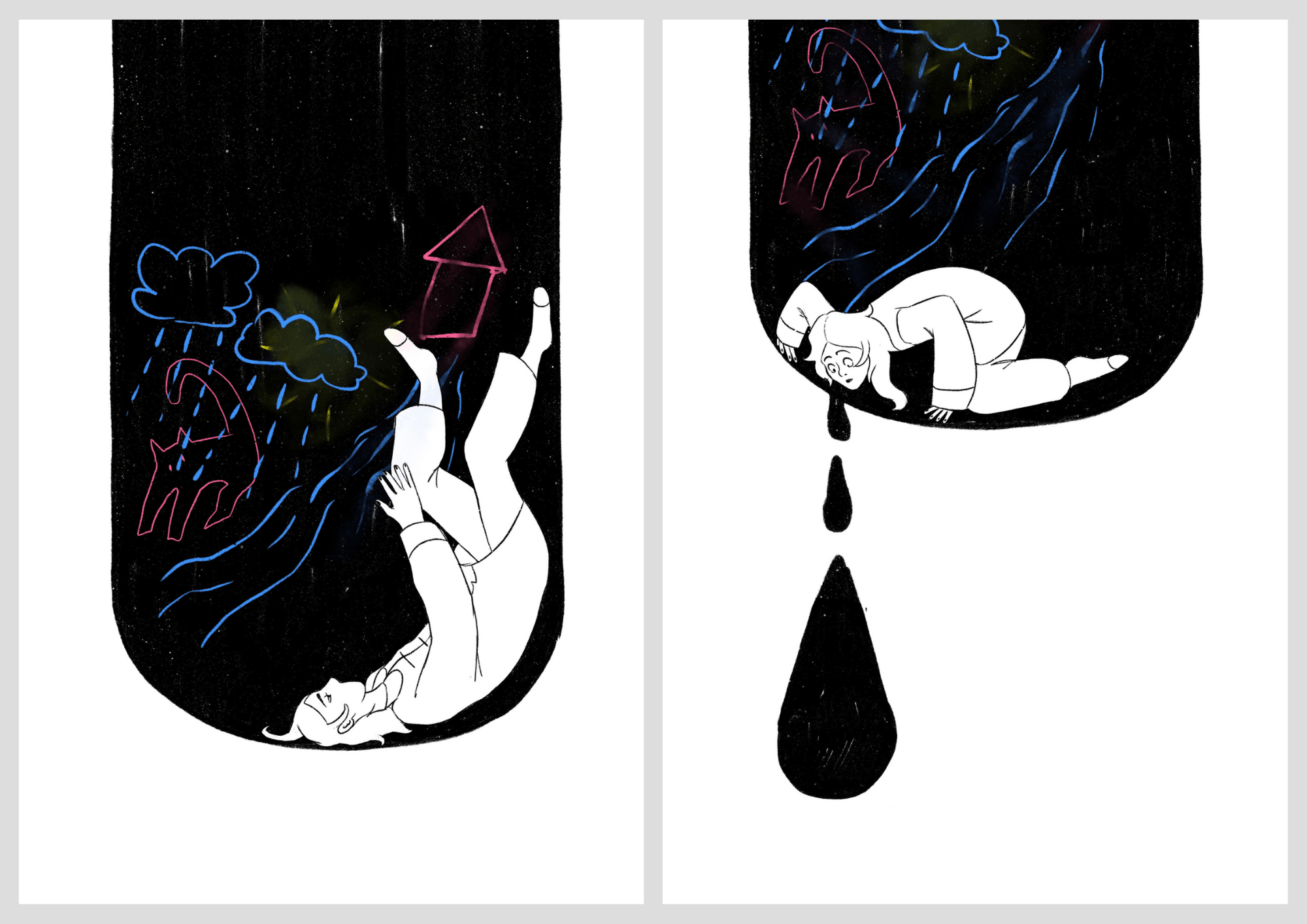
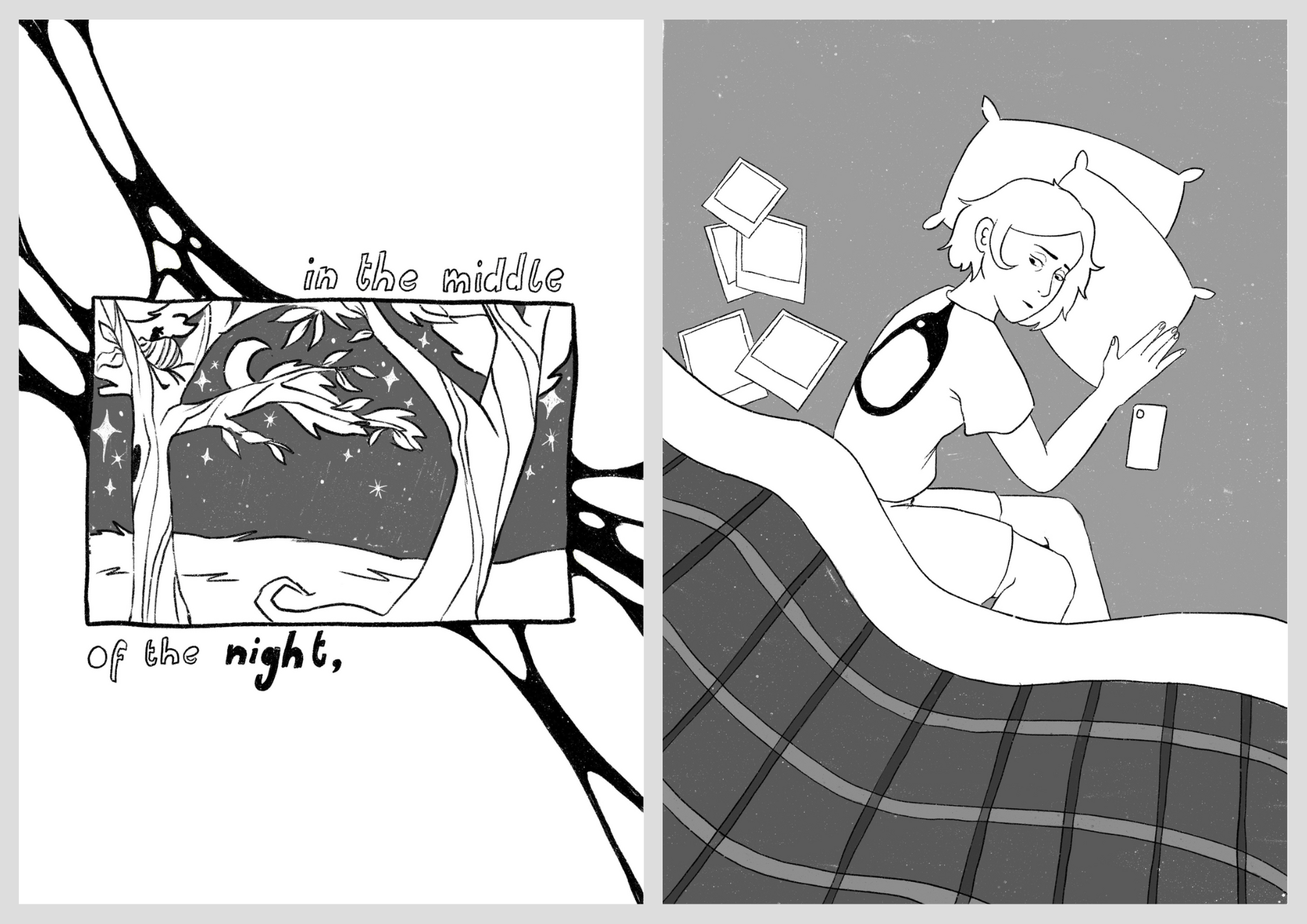
The first pages depict the initial separation from home – and it often feels like an entirely
different planet. Then, character becomes stuck in the same train of thought: who would want to
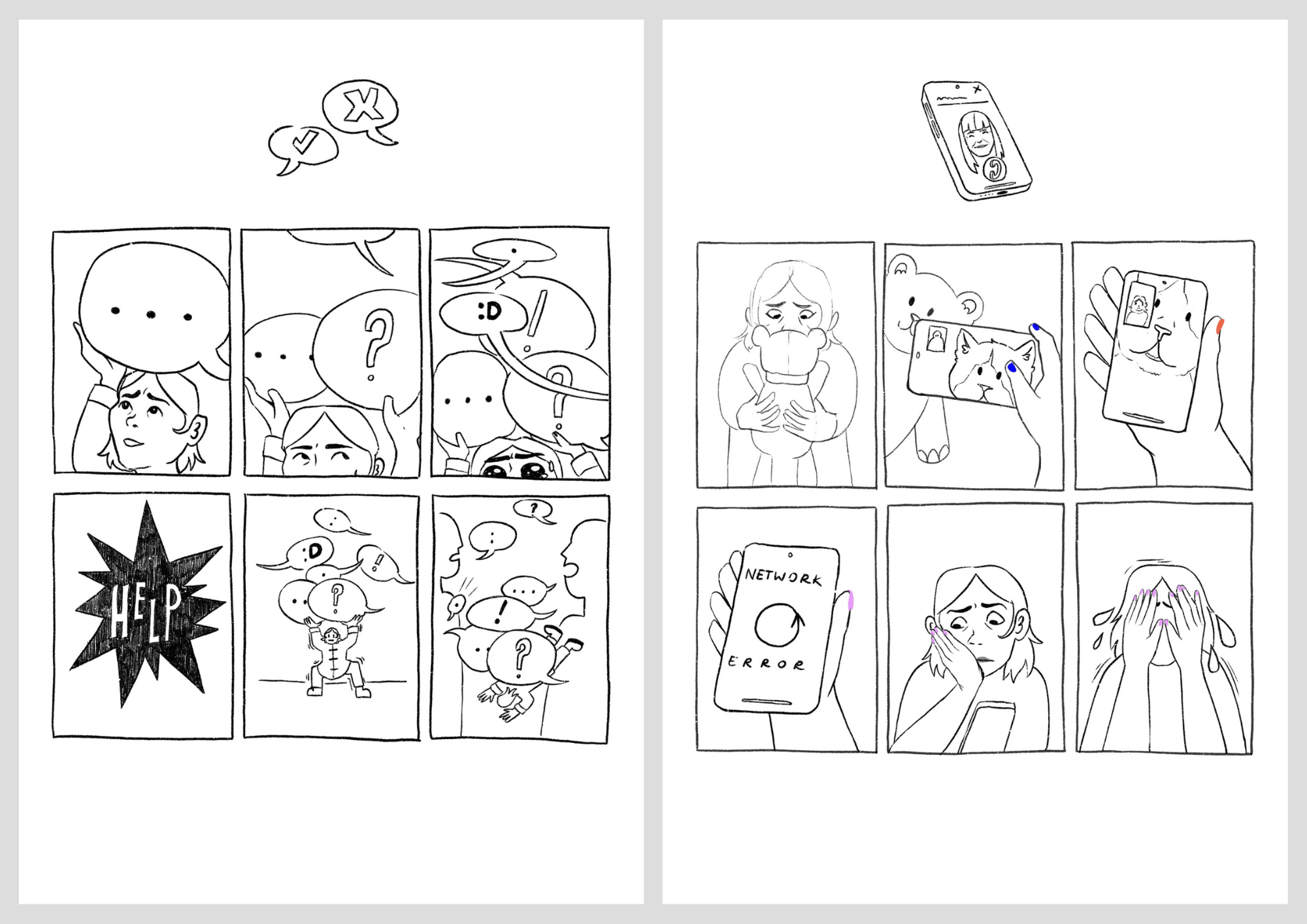
spend time with an outlier? Homesickness and the difference between cultures can make great
impact on a person, deepening the feeling of being out of place.
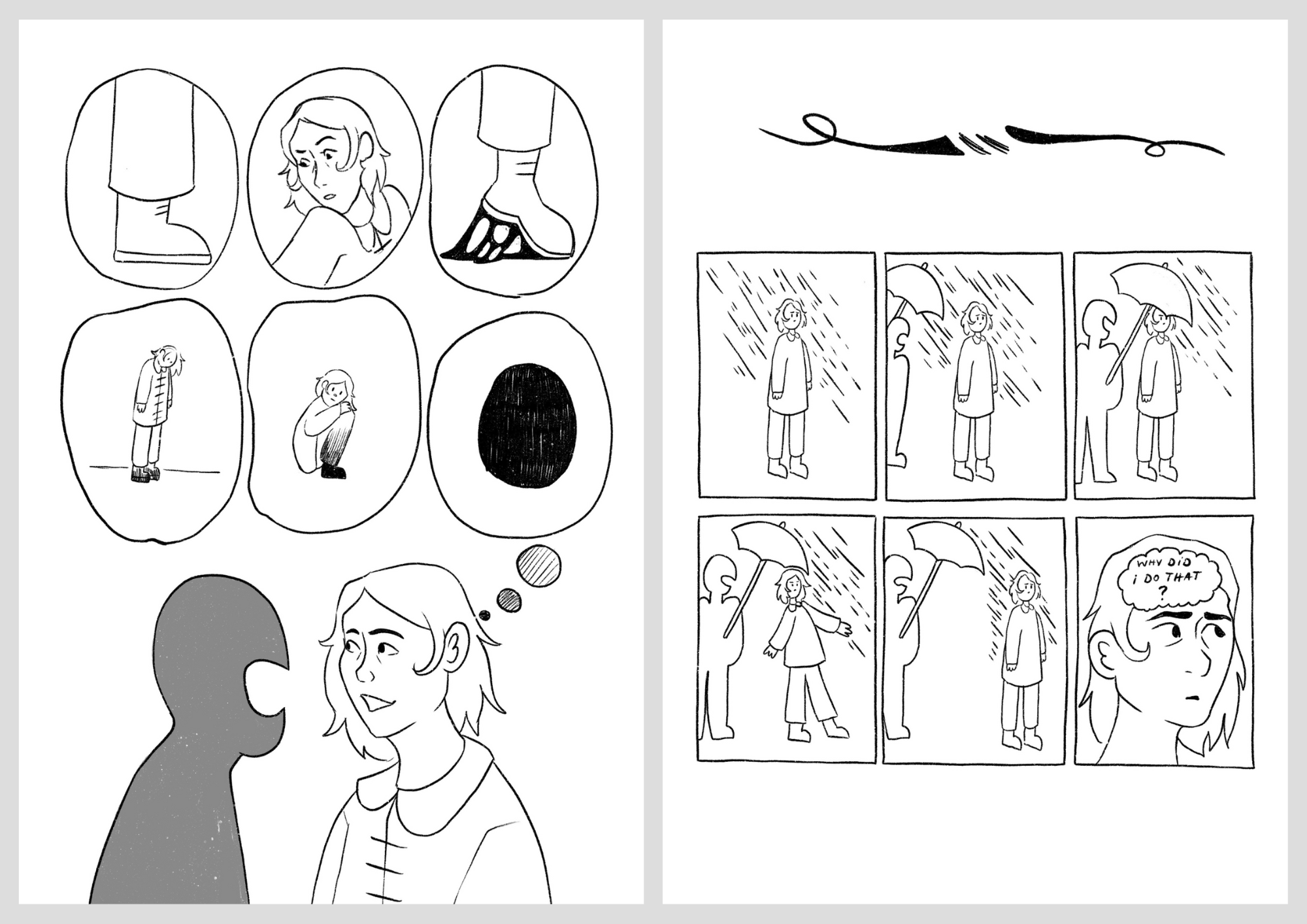
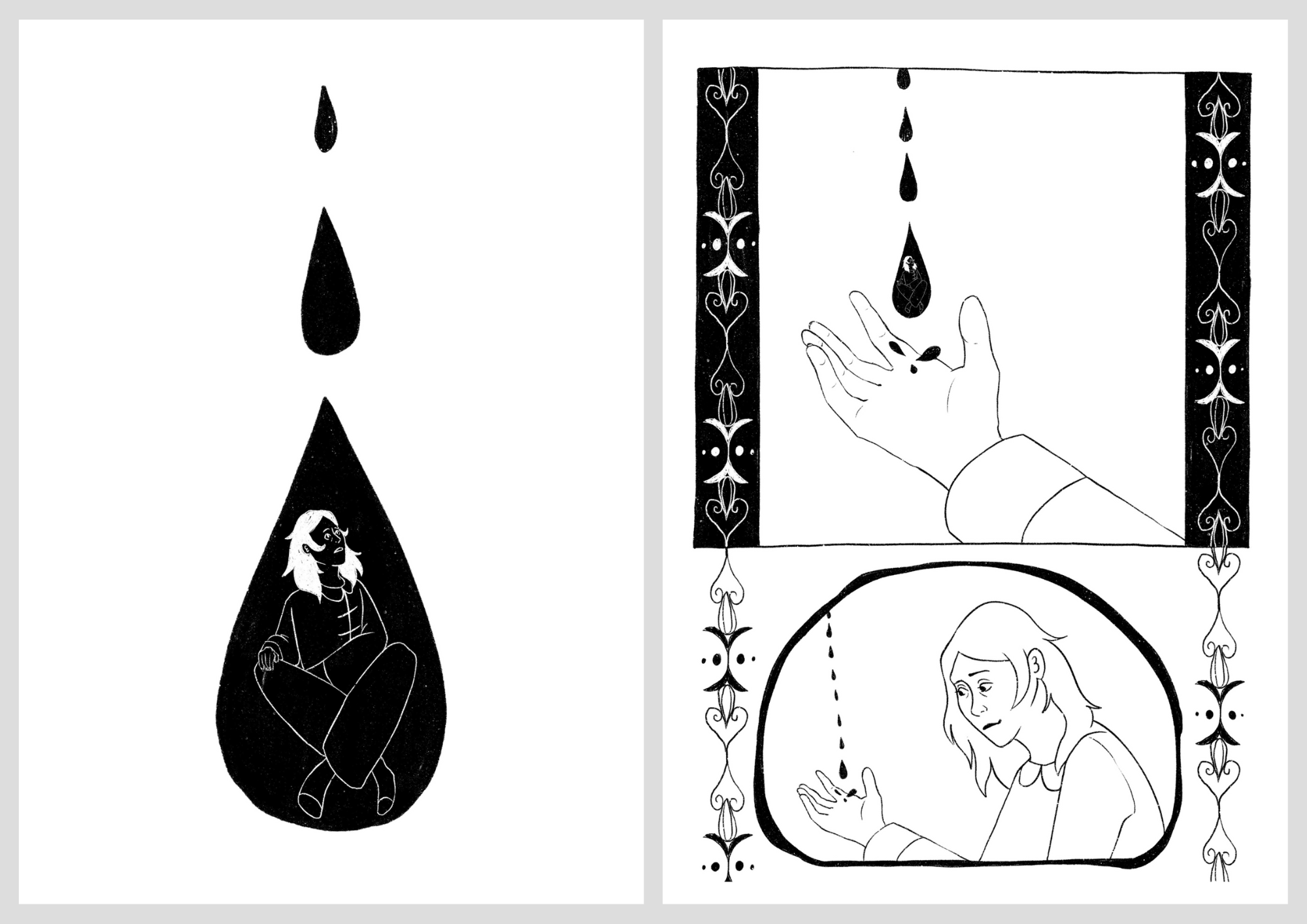
From there, the desire to isolate oneself from others starts to grow root: people seem alien,
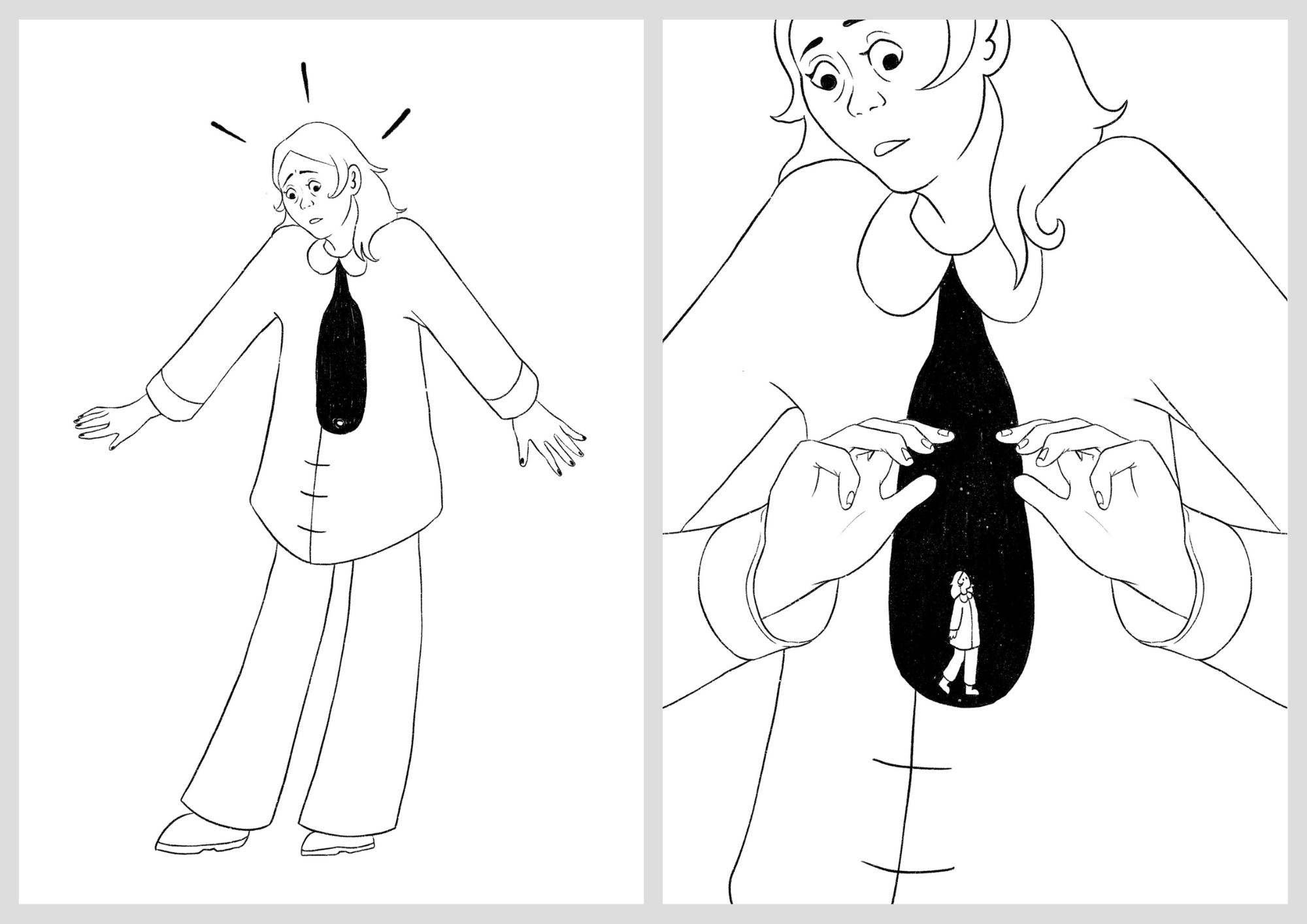
always grouped together, making the character feels excluded. From there, after months of
social isolation, their inner person is so small, that it leaves a gap in the character. Only from
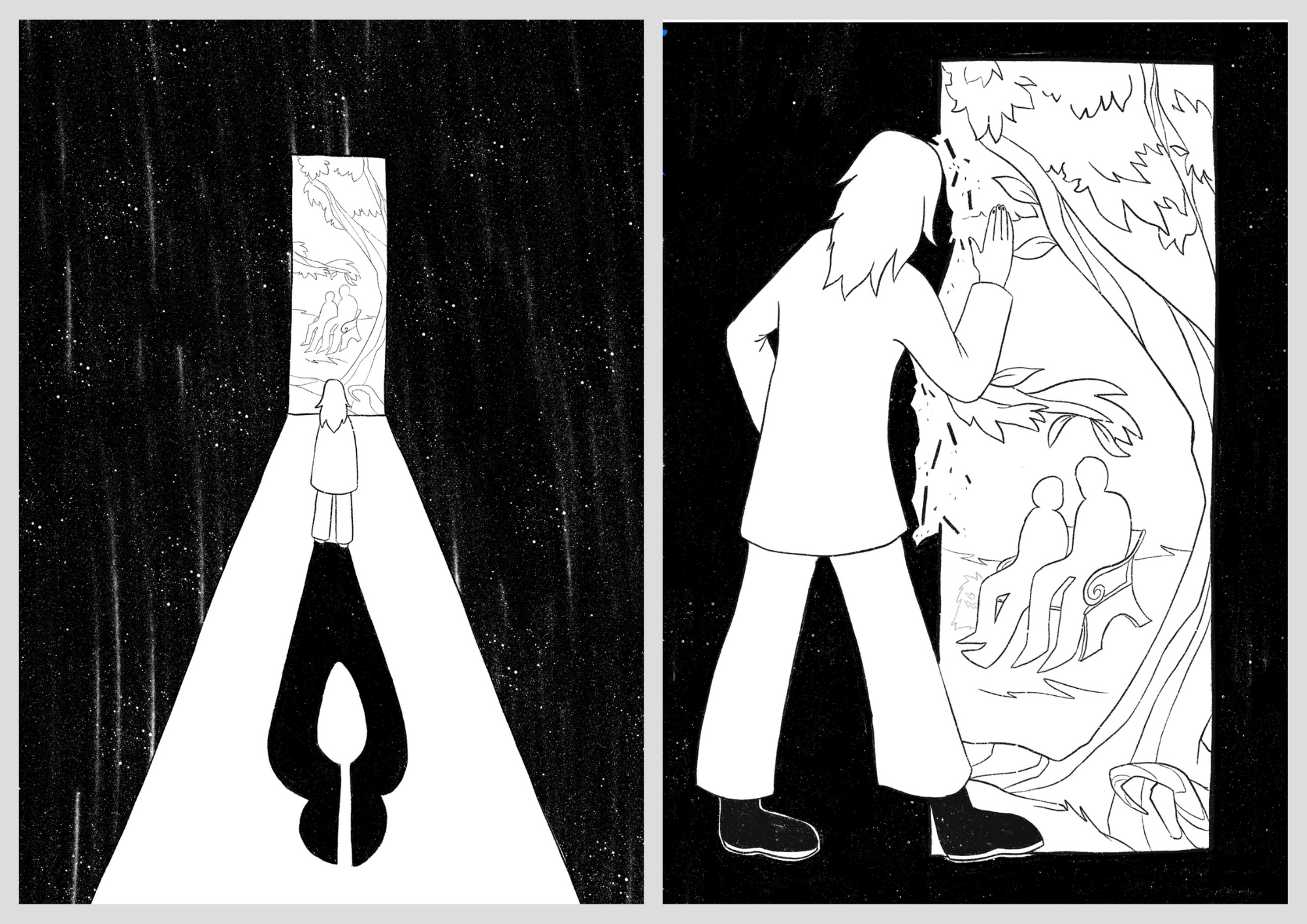
there, as time passes, the character has to be brave and take the first step towards finding a
community.
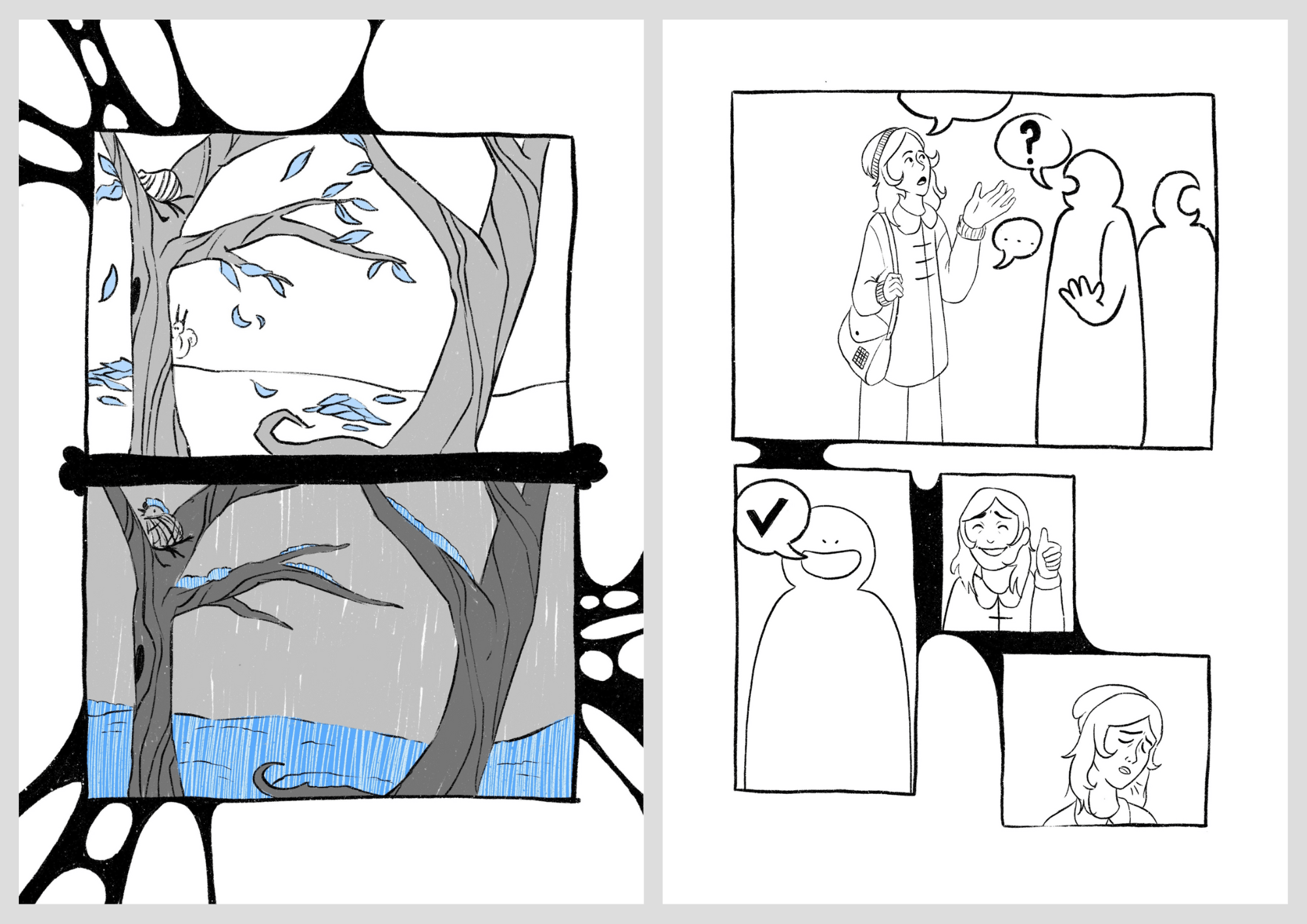
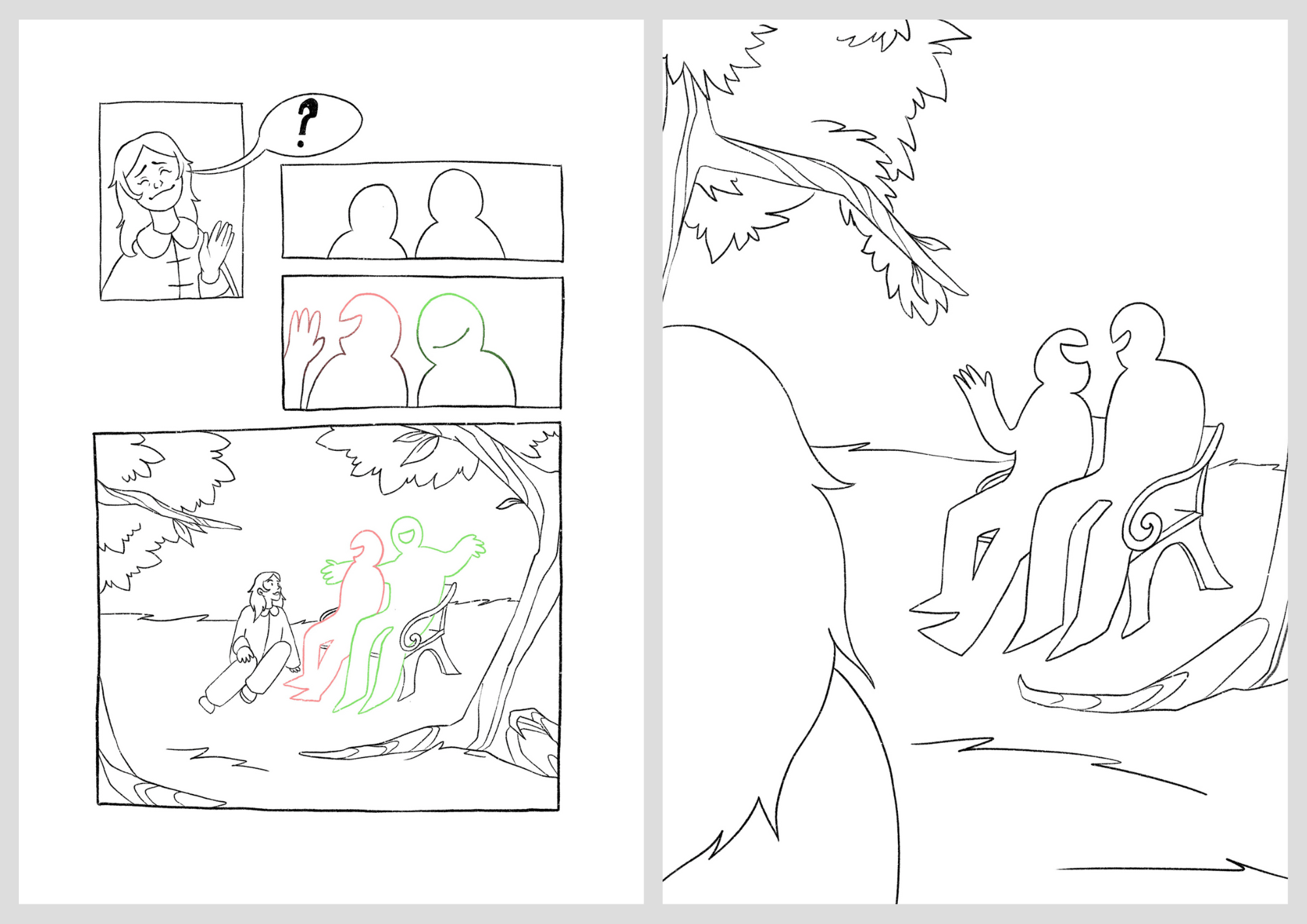
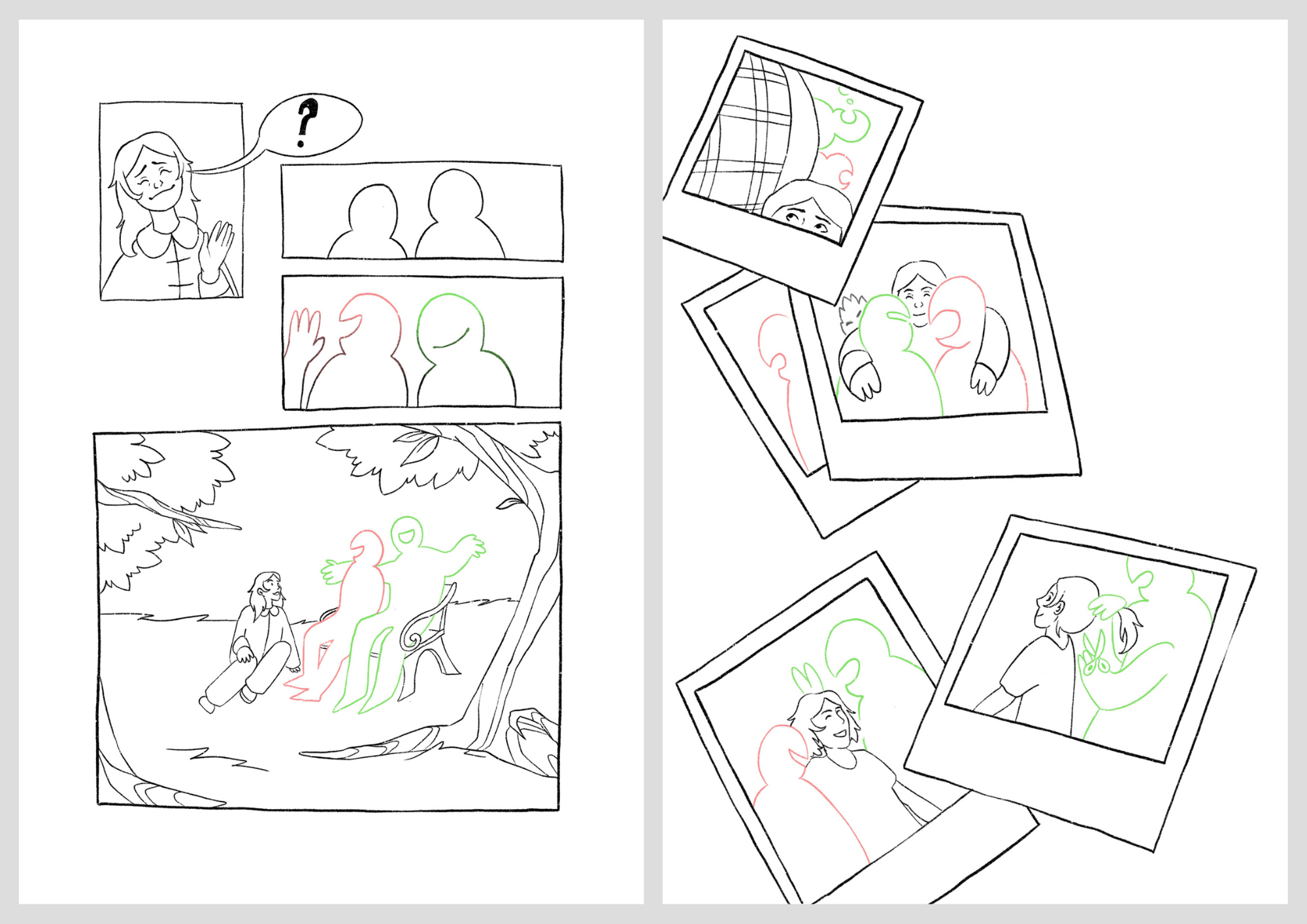
My story has a happy ending, but the feeling of not fitting in, the fear of being again all alone in
her mind still lingers for some time, even after she manages to connect with some people. All
groups and people she talks to are depicted in black and white. Only on page 24, once she gets
to know the two strangers, they gain their colors.
Often overlooked, loneliness isn’t about the number of people around us but about the depth of
our connections. It’s a reminder that while loneliness can diminish through connection, feeling
out of place can leave a scar on a person for an indefinite time.
In the end, this visual essay invites viewers to reconsider the myths around loneliness, and
encourage those who feel it to take the first step in fighting it.
Copyright © 2026. Clara El Jisr | Privacy Policy | Disclaimer | Terms of Service